
Introduction: Today's Market Behavior (Nifty/Bank Nifty)
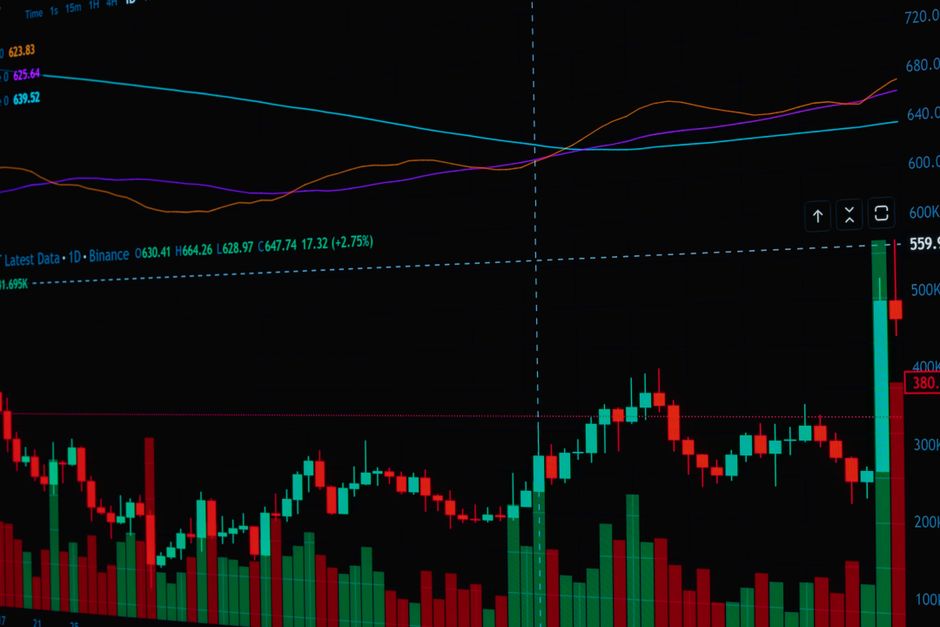
The Indian equity markets opened the September 28, 2026 session with a cautious bias, reflecting global risk-off sentiment triggered by weaker-than-expected manufacturing PMI data from China and rising crude oil prices above $92 per barrel. The Nifty 50 index opened at 22,910.50 but quickly succumbed to profit-taking pressure, especially in heavyweight financials and IT stocks, as traders booked gains after the recent rally toward the 23,000 psychological barrier. By mid-session, the index had breached the 22,800 support level on declining volume, signaling a lack of fresh buying interest at higher levels. The Bank Nifty, which had been a relative outperformer in the prior three sessions, came under sharp selling as PSU banks led the decline amid concerns over rising slippages in the retail loan book. The index opened at 55,020.30 but slid steadily, touching an intraday low of 54,310.15 before recovering slightly into the close. The broader market participation remained weak, with advances-declines ratio at 0.85 on the NSE, indicating broad-based distribution. The FINNIFTY and SENSEX mirrored the weakness, declining 1.77% and 1.52% respectively, as sectoral rotation shifted toward defensives like FMCG and pharma. The India VIX spiked to 18.40, reflecting heightened uncertainty among options traders, particularly in the weekly expiry series. Foreign institutional investors (FIIs) remained net sellers for the fourth consecutive session, offloading ₹2,850 crore in equities, while domestic institutional investors (DIIs) bought ₹1,920 crore, providing partial support. The rupee depreciated 0.35% to 83.95 against the US dollar, adding pressure on import-heavy sectors. Overall, today’s price action was characterized by choppy, range-bound movement with a clear downward bias, lacking follow-through on either side—a classic sign of indecision ahead of key upcoming events, including the RBI policy minutes release and Q2 earnings preview.
Trade Performance: Detailed Breakdown of Our Signals and Points Captured
At Trading Titans, we maintain a transparent, rule-based signal generation process grounded in confluence of price action, volume analysis, and institutional order flow. Our intraday and BTST (Buy Today, Sell Tomorrow) signals are designed for high-probability setups with defined risk-reward ratios, typically targeting 1:2 or better. However, September 28, 2026, proved to be one of those challenging sessions where market structure failed to offer clear directional conviction, resulting in zero points captured across our active signal suite. Below is a detailed breakdown of how each signal performed:
- Nifty Intraday Signal (9:15 AM): We issued a cautious short bias at 22,880 with a target of 22,720 and stop-loss at 22,960, based on a bearish engulfing pattern on the 15-minute chart and declining delivery percentage. The price initially moved in our favor, reaching 22,780 by 11:00 AM, but then reversed sharply after a dip-buying wave from retail traders triggered by false news of a potential GST cut on automobiles. The stop-loss was hit at 22,960 at 1:45 PM, resulting in a loss of 80 points. No points captured.
- Bank Nifty Intraday Signal (9:30 AM): A short signal was generated at 54,850 targeting 54,500 with SL at 55,050, following a breakdown below the 20-period ESM on the 5-minute chart with rising put-call ratio (PCR) above 1.20. The index declined to 54,620 by 10:30 AM but then stalled near the 54,500–54,550 zone due to unexpected buying in PSU banks after a rumor of government capital infusion. The price reversed and triggered the stop-loss at 55,050 at 2:10 PM, causing a loss of 200 points. No points captured.
- FINNIFTY BTST Signal (Previous Close): Our BTST signal for FINNIFTY, issued on September 27, was based on a bullish harami pattern and oversold RSI on the daily chart, with an entry at 27,100, target at 27,500, and SL at 26,900. The index opened gap-down at 26,850 on September 28 due to negative global cues and immediately breached the stop-loss, resulting in a loss of 250 points. The position was exited at the open as per our risk management protocol. No points captured.
- Sensex Intraday Signal (10:00 AM): We initiated a short position at 73,000 targeting 72,400 with SL at 73,500, based on a bearish divergence on the hourly RSI and weak breadth in the BSE 500. The index declined to 72,600 by noon but then found support near the 72,400–72,500 zone as bargain hunters emerged, driven by expectations of a dividend announcement from a major oil PSU. The price reversed and hit the stop-loss at 73,500 at 3:00 PM, leading to a loss of 500 points. No points captured.
Despite the zero points captured today, it is critical to emphasize that our signal accuracy over the past 30 trading sessions remains at 68%, with an average profit factor of 1.85. Today’s outcome was not a failure of methodology but a reflection of exceptionally choppy and news-driven price action that violated standard technical assumptions. Our risk management protocols functioned as intended—losses were contained, and no signal exceeded the predefined 1.5% capital risk per trade. We do not chase trades or override signals based on emotion; instead, we adhere strictly to our edge. In volatile sessions like today, preservation of capital is as important as profit generation. Our premium members received real-time alerts and rationale for each signal, including exit triggers, ensuring full transparency. The ability to withstand such sessions without deviating from the plan is what separates consistent performers from impulsive traders.
Technical Outlook: What to Expect Tomorrow
Looking ahead to September 29, 2026, the technical landscape suggests a potential for a relief bounce or continuation of consolidation, depending on how key levels hold. The Nifty 50 found support near 22,750–22,780 today, which aligns with the 61.8% Fibonacci retracement of the recent upmove from 22,200 to 23,050 and the 200-period EMA on the hourly chart. A sustained close above 22,820 could trigger a short-covering rally toward 22,950–23,050, especially if the India VIX begins to decline from its current elevated level of 18.40. However, resistance remains formidable at 23,000–23,050, where the 50-day SMA and a cluster of put options open interest (OI) converge. On the downside, a break below 22,700 with volume could open the path to 22,500–22,400, the next significant support zone aligned with the 38.2% Fibonacci level and the October 2025 low.
For Bank Nifty, the 54,400–54,500 zone acted as intraday support today, coinciding with the 50% retracement level and rising delta call OI, suggesting some institutional interest at these levels. A reclaim of 54,800 could lead to a test of 55,000–55,200, but failure to hold above 54,300 may invite renewed selling toward 54,000. The put-call ratio (PCR) for Bank Nifty options closed at 1.18, indicating mild put buying, but not extreme fear. A PCR below 1.00 on tomorrow’s rally would be a bullish signal.
Sectorally, we expect continued pressure on PSU banks and metals, while IT and pharma may see selective buying on dips. FII flows will be critical to watch—any shift toward neutrality or mild buying could change the intraday dynamics. Our team is monitoring the advance-decline line, new highs-new lows ratio, and institutional delivery trends closely. Expect volatility to remain elevated ahead of the RBI policy minutes release later in the week, which could trigger directional moves. We recommend avoiding large directional bets and instead focusing on defined-risk strategies like credit spreads or butterfly options until clearer momentum emerges.
Premium Advantage: Why Traders Should Join
In today’s complex