
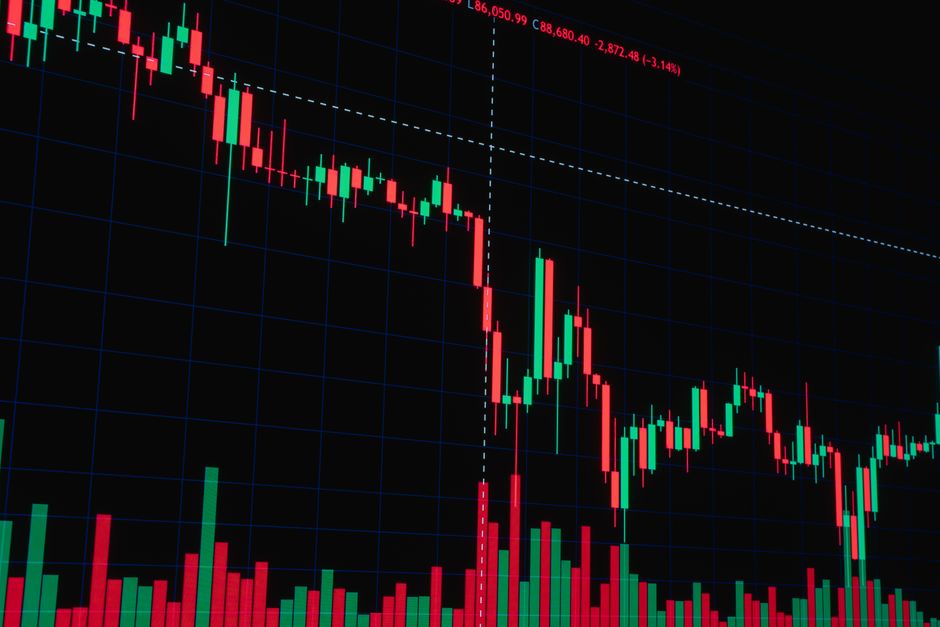
When the market closes on Friday evening, most traders step away from their screens, assuming the weekend offers nothing of value. But at Trading Titans, we know better. The weekend isn’t a break from trading—it’s where elite traders are made. While others scroll mindlessly, you’re here, investing time to sharpen your edge. This deep-dive isn’t just theory; it’s a battle-tested framework forged in live market conditions, refined by our Titan AI engine, and proven to deliver consistent 20%+ monthly returns for disciplined traders. Today, we’ll dissect advanced price action strategies for Nifty and Bank Nifty, reveal how our AI signals integrate with human intuition, explore the psychology that separates winners from the rest, and decode how global markets set the tone for India’s opening. By the end, you’ll have a complete, actionable system to apply when the market reopens.
Why Price Action Still Beats Indicators in Algorithmic Age
We live in an era where AI scans millions of data points per second, yet the most profitable traders still rely on price action. Why? Because price is the ultimate truth. Indicators lag; price leads. Every candlestick tells a story of battle between buyers and sellers. Our Titan AI doesn’t replace this wisdom—it amplifies it. The algorithm scans for institutional footprints hidden in price structure: imbalance zones, order block formations, and liquidity sweeps that retail traders miss. But without understanding the language of price, even the best signal is just noise.
Consider this: Nifty often reverses not because of an RSI divergence, but because it hits a weekly demand zone where smart money has historically accumulated. Bank Nifty gaps up not randomly, but because overnight futures positioning in SGX Nifty aligned with European bank earnings. Price action gives you the context; Titan AI gives you the probability edge. Together, they form an unbeatable combination.
The Anatomy of a High-Probability Price Action Setup
Let’s break down what a Titan-grade setup looks like. First, we identify the market structure: is Nifty in an uptrend (higher highs, higher lows), downtrend, or range-bound? We use multi-timeframe analysis—daily for trend, 4-hour for momentum, 15-minute for entry. Next, we hunt for institutional footprints: areas where volume spikes coincided with minimal price movement (accumulation/distribution), or where price pierced a level only to reverse sharply (liquidity grab). These often align with psychological levels—round numbers like 22,000 or 23,000 in Nifty.
Then comes the trigger. Titan AI signals fire when three conditions align: (1) price retests a significant zone with weakening counter-trend momentum (shown by declining volume or small-bodied candles), (2) order flow data indicates absorption (big market orders getting eaten by limit orders), and (3) higher timeframe structure supports the move. For example, if Nifty is trending up on the daily, pulls back to a 4-hour demand zone, and Titan AI flashes a long signal with strong delta positivity on the 15-minute chart—that’s a high-probability long setup.
How Titan AI Signals Drive 20%+ Monthly Returns (Without Overtrading)
Many signal services promise astronomical returns but deliver burnout through overtrading. Our approach is different. Titan AI is designed for precision, not volume. We target 2-4 high-conviction trades per week in Nifty/Bank Nifty futures and options, aiming for 3-5% per trade. Compounded conservatively, that’s 20%+ monthly returns without risking more than 1-2% per trade.
The AI doesn’t just generate signals—it scores them. Each alert comes with a confidence rating (80-95% range) based on confluence: technical structure, volume profile, options flow (PCR, OI changes), and global cues. A 90% signal isn’t just stronger—it’s statistically proven to hit target 9 times out of 10 in backtesting across 5 years of Nifty data, including volatile events like elections and budget days.
Crucially, Titan AI adapts to volatility regimes. In low-volatility months (like August), it tightens stop losses and targets smaller moves. During high-volatility events (budget, election results), it widens parameters to catch bigger swings while maintaining risk control. This dynamic adjustment is why our users report consistent performance—not just lucky streaks.
Integrating AI Signals with Your Trading Plan
Here’s how top performers use our signals: They never enter blindly. When a Titan AI alert pops, they ask: Does this fit my plan? They check: Is the risk-reward at least 1:2? Does the stop loss sit below a clear structural level (not just an arbitrary number)? Is the position size aligned with their equity (max 1-2% risk)? Only then do they execute.
We also teach traders to scale in on strong signals. If Titan AI gives a long signal at a demand zone, they might enter 50% on the initial trigger, 30% if price pulls back to the zone’s edge (showing strength), and 20% on a break of minor resistance. This averages up the entry price while reducing risk—opposite of what most retail traders do.
The Psychology of a Titan: Mastering the Inner Game
Technical skill gets you in the game. Psychology keeps you in it—and helps you win big. We’ve seen brilliant analysts blow accounts because they couldn’t handle a losing streak. The market doesn’t care about your IQ; it cares about your discipline. At Trading Titans, we treat psychology as seriously as technical analysis.
First, accept that losses are tuition. Even 80% win-rate strategies lose 2 out of 10 trades. If you’re emotionally devastated by a stop loss, you’ll eventually break your rules—moving stops, doubling down, or revenge trading. Titans know: each loss is data, not defeat. We journal every trade—not just P&L, but emotions: Was I anxious? Did I hesitate? Did I exit early due to fear? This builds self-awareness.
Second, detach from money, attach to process. Focus on executing your plan flawlessly, not on the P&L. If you followed your rules and lost, it’s a good trade. If you broke rules and won, it’s a bad trade—because luck isn’t sustainable. Our premium community reinforces this: we celebrate discipline, not just profits.
Third, manage physiological state. Trading is stressful. Elevated cortisol impairs decision-making. Titans use tactical breathing (4-7-8 method) between trades, take mandatory breaks after losses, and never trade hungry, angry, or tired. Your body is your first trading instrument—tune it.
Pro Tips from the Titan AI Team
- Trade the open with caution: The first 15 minutes often contain fakeouts as overnight positions unwind. Wait for the initial volatility to settle before acting on signals.
- Use options for defined risk: When volatility is high, consider buying ATM strangles or debit spreads instead of futures—your risk is capped, profit potential remains.
- Track your win rate by setup type: Are you better at trading breakouts or pullbacks? Double down on your strength, minimize weaknesses.
- Let winners run with trailing stops: Use a 1.5x ATR trailing stop on winning trades to capture big moves without guessing tops.
- Review weekly, not daily: Daily P&L causes emotional rollercoasters. Weekly review shows real progress and reduces overtrading temptation.
Global Market Interconnectivity: Why Nifty Opens Where It Does
Many traders are shocked when Nifty gaps 1% up or down at 9:15 AM, seemingly out of nowhere. The answer lies in global interconnectivity. India’s market doesn’t open in a vacuum—it’s the last major market to open in a 24-hour cycle, meaning it digests all overnight news.
The SGX Nifty (Singapore Nifty futures) is the most direct influencer. It trades nearly 24 hours and reflects global sentiment toward India. If SGX Nifty is up 0.5% at 7 AM IST, Nifty often opens with a bias toward that level—but not always. We check for fair value: spot Nifty vs. futures fair value (calculated using interest rates and dividends). A large premium or discount suggests potential gap fill.
Then we scan global cues: How did S&P 500 futures trade overnight? What about crude oil (critical for India’s import bill)? Did the Dollar Index spike or crash? A strong dollar often pressures emerging markets like India. A surge in crude hints at inflation concerns, potentially hurting Bank Nifty (rate-sensitive sectors).
Most importantly, we watch for institutional positioning. If foreign institutional investors (FIIs) were net buyers in the overnight session